Replication-first
Anywhere-to-anywhere synchronization
Stornamics is built around asynchronous replication events that can move data across products, sites, and environments.
Architecture overview
Stornamics is built for distributed data operations. The platform combines replication-first infrastructure, flexible deployment topology, and product layers for workflows, governance, and scale.
Replication-first
Stornamics is built around asynchronous replication events that can move data across products, sites, and environments.
Deployment flexibility
The same platform model supports managed environments, local infrastructure, and mixed topologies.
Operator control
Teams can shape data placement, retention, performance, and event-driven automation around real operating needs.
Core engine
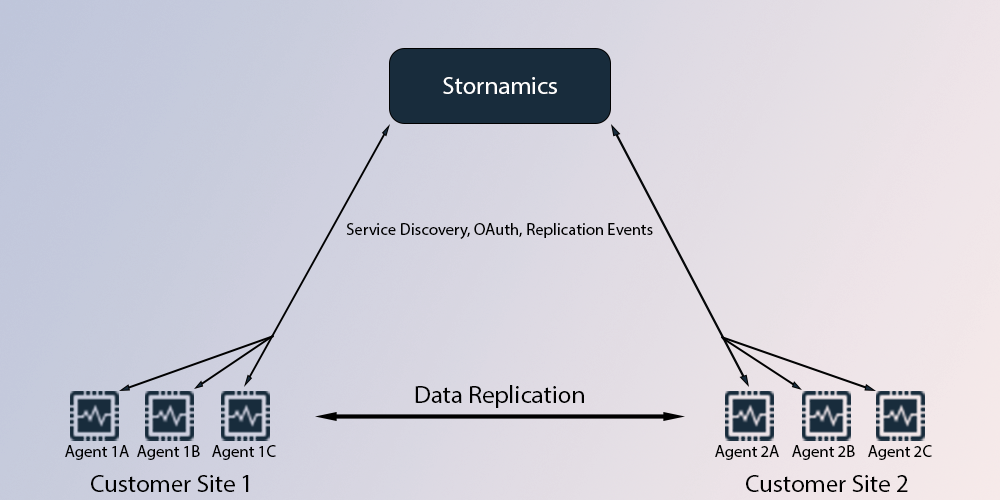
The Stornamics replication engine is the foundation of the platform. It captures database change history as replication events so data can be synchronized across cloud services, local environments, and distributed production sites.
Coordination layer
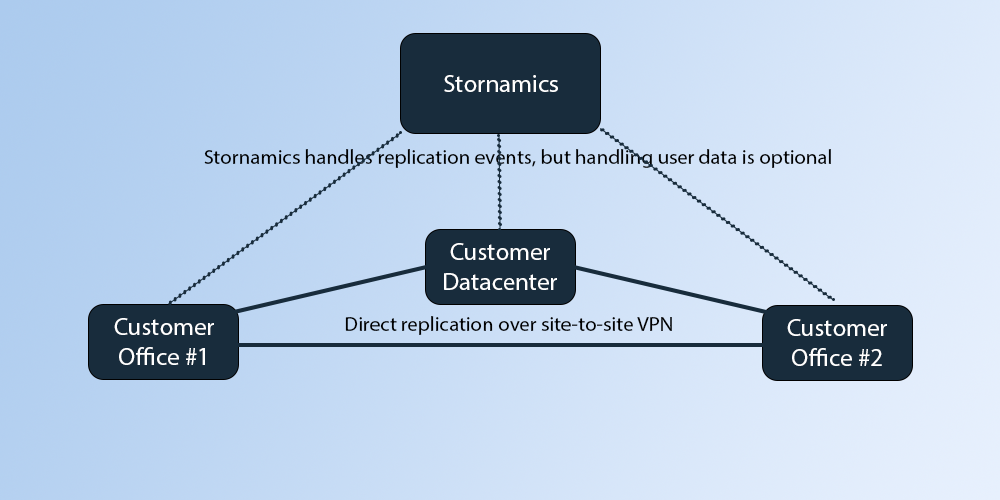
Beyond replication, the Stornamics service coordinates discovery, configuration, authentication, and authorization so nodes can operate together without forcing all traffic through a central point.
Topology control
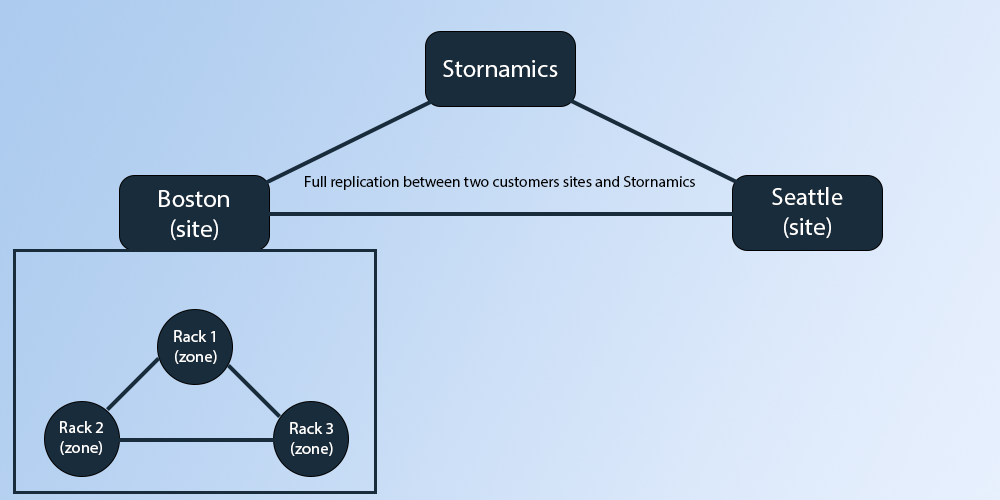
Stornamics gives teams flexibility in how they structure deployments. Customers can define sites and zones that reflect geography, retention needs, analytics workloads, production resilience, and regulatory requirements.
Scale path
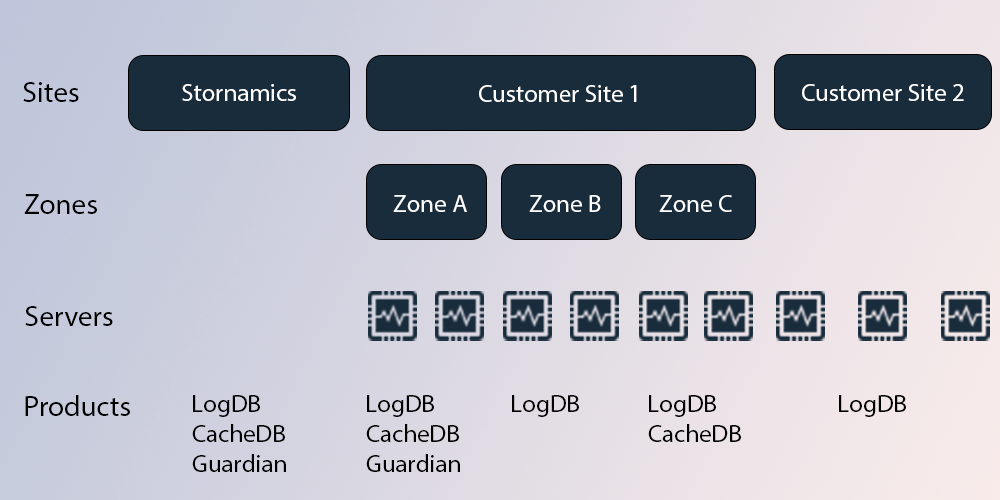
As deployments grow, zones can contain multiple servers for horizontal scaling and parallel query execution. The same topology model can also support different product mixes, compliance boundaries, or performance tiers.
Workflow automation
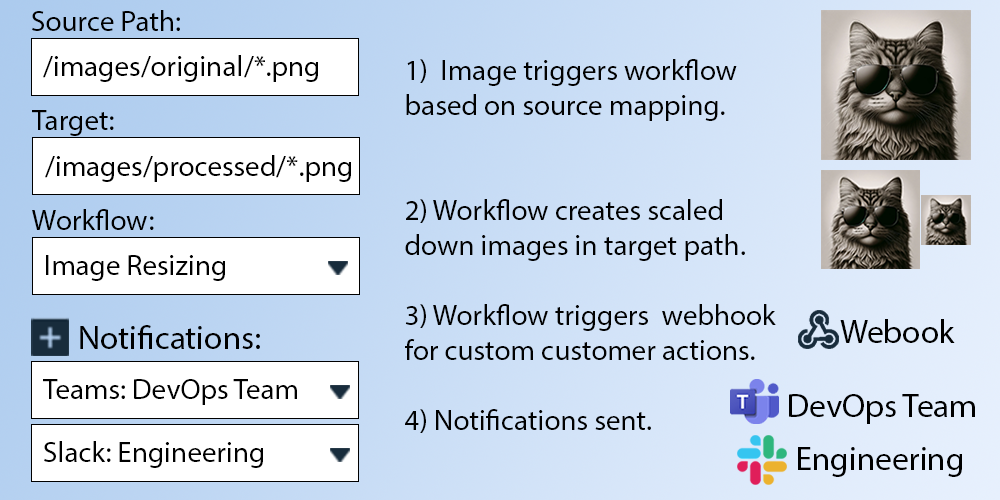
EdgeCompute is the memory-optimized workflow engine for responding to replication events in real time. It reduces the need for bespoke pre-processing pipelines by letting teams trigger actions directly from data changes.
Protection layer
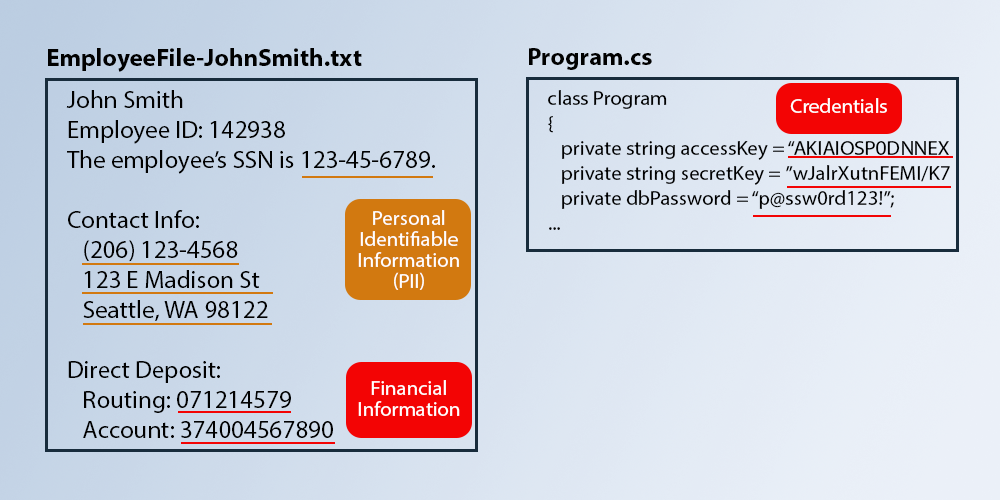
Guardian extends the platform with privacy and security controls. It scans incoming data for PII and other issues while helping teams classify data and improve governance across replicated environments.